
Below is what happened to my brain and therefore my writing upon completion of this week’s readings list:
Rambling witticism; (Pointed) finger pointing; (Public) Court Jester of angst and in-sight: David Foster Wallace; literary hero to Zadie Smith – prophetess of internet inattention disorder and motif reviver to Raymond Chandler (“Hollywood’s Big Sleep”) who bemoaned the state of the contemporary mind in 1946. “A man with a realistic habit of thought can no longer write for intellectuals. There are too few of them and they are too specious,” Chandler decrees actors and the camera to be better than words at conveying [anything? something? nothing?] but in any case quickly. He is sarcastic and wise at the same time. My favorite quote: “[Hollywood's] annual tribal dance of the stars and the big-shot producers...which is a chronic case of spurious excitement over absolutely nothing.”
“Specious: obsolete; showy; having deceptive attraction or allure; having a false look of truth or genuineness—sophistic” (merriam-webster.com).
The Celebrity Cruise ship and its ilk that Wallace describes as floating wedding cakes, so white they look boiled, are specious, at least to a man inclined to live in his head, and therefore mostly hide out in his cabin for the week. The fact that he conducts a phone interview with Frank Conroy, complete with the sinking sound of a writer admitting that once he “prostituted himself” is ballsy. Wallace is a delightfully neurotic genius; Conroy was a lyricist on vacation destined to implant lapis lazuli in the mind of a man who sees the churning ocean below the ship as a kind of swirling toilet.
I felt my mind swirling down in the last couple of pages—the one long paragraph that Wallace couldn't stop writing, had to get it said. But then, the quotes, you can't knock Wallace's quotability: "flatulence-of-the-gods, vague and ubiquitous nautical snot, rictus of pleasure, pampering stress." His themes of despair and sadness haunt the piece providing a slightly annoying glue, oh there it is again. And the repetition of suggestive allusions in sync with preceding rants like umbilical passage on page 4 after describing the temperatures as uterine and the pampering akin to diapering (by unveiled inference) and the last time I was floating in warm and salty fluid on page 3.
But these all have to do with pleasure, changed pleasure according to Chandler and a return to “uterine” pleasure, if we ask Wallace. The lure of glossy marketing catalogs is digitally reproduced on the internet. Images range from the desirable to the horrific, whatever your pleasure they dance and flick at a single click, what will you miss if you do not check Facebook, follow the best on Twitter. So very contrary to the needs of a writer, who as Smith describes the magic place in the middle of writing a book, “Even as your wife [husband, boyfriend, girlfriend] tells you she’s sleeping with your brother her face is a gigantic semicolon, her arms are parentheses and you are wondering whether rummage is a better word than rifle.” It is a place of syntactic orgasm, voices in your head—your own disguised as that of the other—precision to the nth degree, lyric, and dynamic assertion.
This collection of Smith’s essays “Changing My Mind,” Zach Baron points out, allows us to “watch…Smith operate in real time.” I think that is both the magic and the danger of a writer in the digital realm, if unedited or not edited well. I have found that other eyes, informed, experienced eyes are invaluable in formulating good writing. As poet Toi Derricotte mentioned, in a recent visit with my pedagogy class, to edit our own (especially lyrical) work, it takes the mind time to get far enough from the original creation to hear it in its own right, rather than what was coursing through your brain at the time of the original writing.
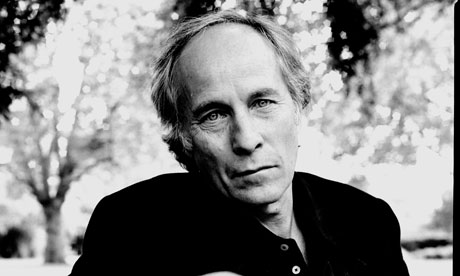
I love what Richard Ford wrote in the New York Times article that Paige put up on Saturday. “Isn't there a measure of coldly cleansing exhilaration involved in appraising one's personal imperatives as though they were moral matters?” For the writer, isn’t there a compulsion that feels like a moral necessity, or there is no writing? If what I write has no obligation to exist, no demand like a child insisting, pressing to be brought forth into the light, it will wither, slipping back into the hidden places, somewhere behind the grocery list.
Chandler says that since film and TV form the picture for the brain, tell the story, requiring little speech and therefore little writing, mostly grunts and gestures make a script—our brains no longer have to process verbal clues and after a while: “You don’t miss your brain because you don’t need it.” But that's the point of Richard Ford's “Goofing Off While The Muse Recharges,” giving the brain a rest and letting the writing bubble back up to the surface—organically (to use the current cliché). Unless the carbonation never occurs.

No comments:
Post a Comment